Tomb of Nefertari
Virtual asset linked to this landmark

- Virtual owner
- The platform
- Times sold
- 0
- Fame on Wikipedia
- 16,819 article reads in 12 months
- Searches (30 days)
- 0
- Watching
- 0
Virtual ownership only. It gives no legal, financial or physical right in the real landmark. Prices are set by the market and may fall.
About Tomb of Nefertari and its history
The tomb of Queen Nefertari, wife of Ramesses II, in the Valley of the Queens, famed for its wall paintings.
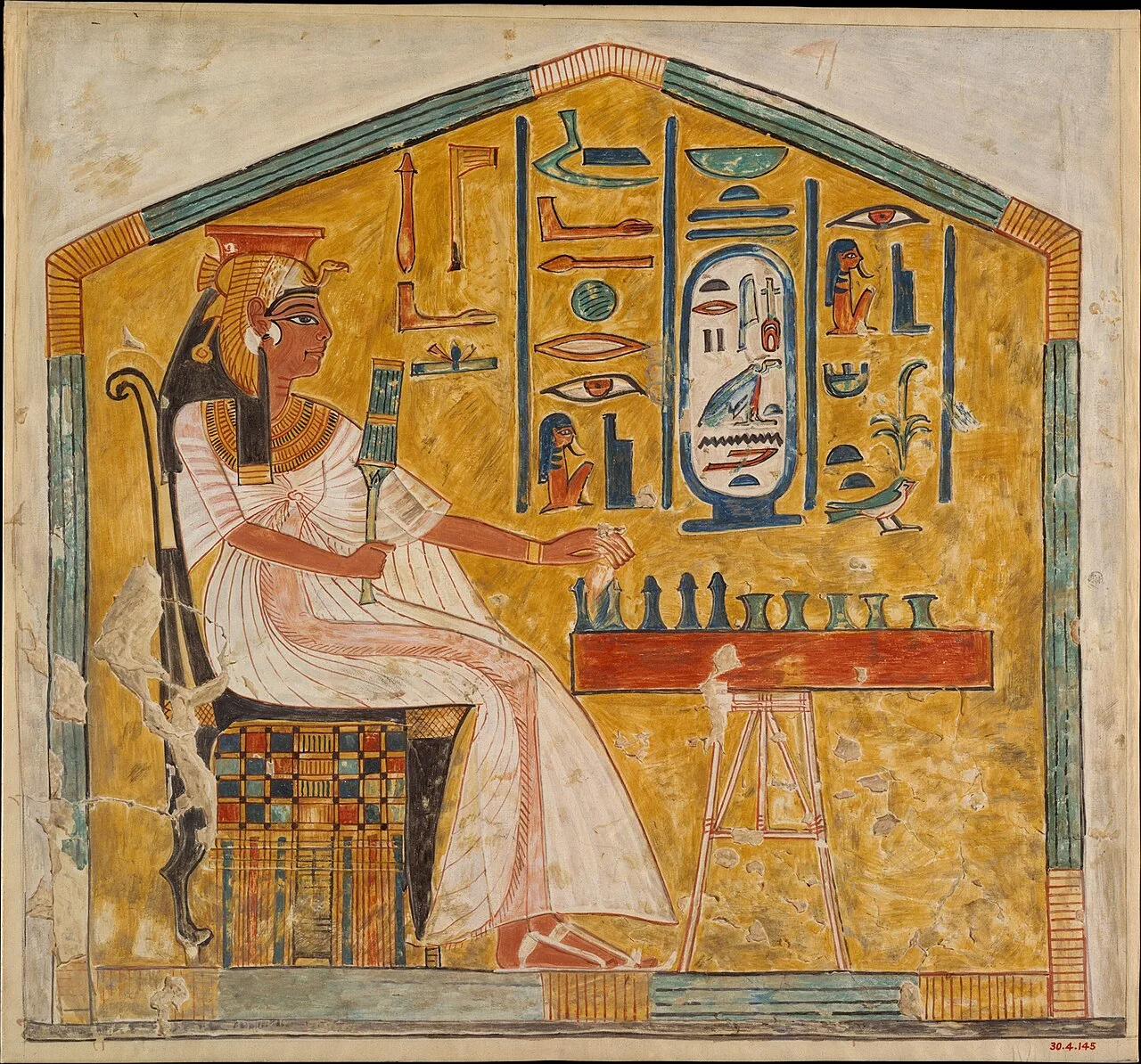
QV66 is the tomb of Nefertari, the Great Wife of Pharaoh Ramesses II, in Egypt's Valley of the Queens. It was discovered by Ernesto Schiaparelli (the director of the Egyptian Museum in Turin) in 1904. Nefertari, which means "The most beautiful (one) among them", was Ramesses II's favorite wife; he went out of his way to make this obvious, referring to her as "the one for whom the sun shines" in his writings, built the Temple of Hathor at Abu Simbel to idolize her as a deity, and commissioned portraiture wall paintings. In the Valley of the Queens, Nefertari's tomb once held the mummified body and representative symbolisms of her, consistent with most Egyptian tombs of the period. Now, everything has been looted except for two thirds of the 5,200 square feet of wall paintings. For what still remains, these wall paintings characterized Nefertari's character. Her face received particular attention to emphasize her beauty, especially the shape of her eyes, the blush of her cheeks, and her eyebrows. Some paintings were full of lines and color of red, blue, yellow, and green that portrayed exquisite directions to navigating through the afterlife to paradise.
Discovery of the tomb
The tomb was discovered in 1904 in the Valley of the Queens, at Thebes (west bank), by the Italian archaeologist Ernesto Schiaparelli, who was professor of Egyptology at the University of Turin and greatly expanded the collection of the Museo Egizio, where he served as director from 1884 to 1928.
In 1903 Schiaparelli obtained from the Egyptian authorities the exclusive concession to excavate in the Valley of the Queens; he was the first Egyptologist to conduct investigations at the site with a systematic method in three successive campaigns, assisted by his capable collaborator Francesco Ballerini.
During the second campaign, while Schiaparelli was carrying out surveys to the north of the main wadi in the area, where other tombs had already been found, the workmen uncovered the first steps of a staircase that they considered a sure sign of a tomb. After removing the masses of debris covering the steps, they quickly brought to light a staircase cut into the rock between two whitewashed walls, with in the middle the characteristic descending ramp that was necessary to move and lower the sarcophagus. The staircase, 1.65 m wide, descended for eight metres to a large wall with a doorway; on the door jambs the queen's name was written. The tomb, however, was found open, with no trace of the original sealing, and much rubble had fallen as far as the first hall. The other rooms were found empty, and it was clear that the tomb had been looted, perhaps already in antiquity. Of the pink granite sarcophagus only a few pieces were recovered, including several fragments of the lid.
Information source: Wikipedia · rewritten and edited by Maalem; available under CC BY-SA 4.0
- Location
- Luxor, Egypt
- Coordinates
- 25.7281, 32.5925
- Category
- Ancient Sites
Source: Wikipedia · Factual information about the real landmark; unrelated to virtual ownership.
Price & ownership history
Landmarks near Tomb of Nefertari
Map →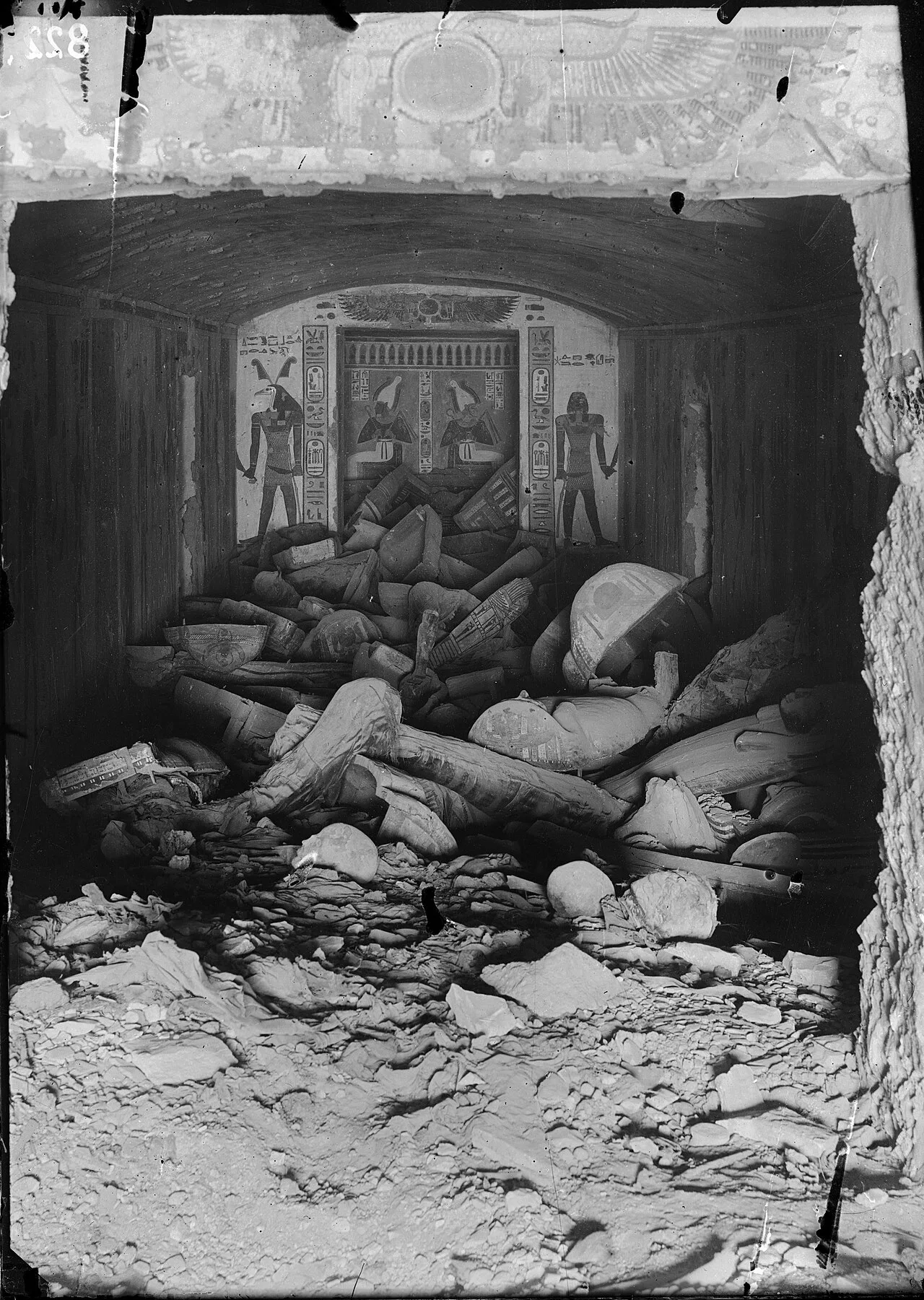 Available
📖 2 K reads
Available
📖 2 K reads
 Available
📖 27 K reads
Available
📖 27 K reads
 Available
📖 8 K reads
Available
📖 8 K reads
 Available
📖 33 K reads
Available
📖 33 K reads