Sakakini Palace
Virtual asset linked to this landmark

- Virtual owner
- The platform
- Times sold
- 0
- Fame on Wikipedia
- 1,909 article reads in 12 months
- Searches (30 days)
- 0
- Watching
- 0
Virtual ownership only. It gives no legal, financial or physical right in the real landmark. Prices are set by the market and may fall.
About Sakakini Palace and its history
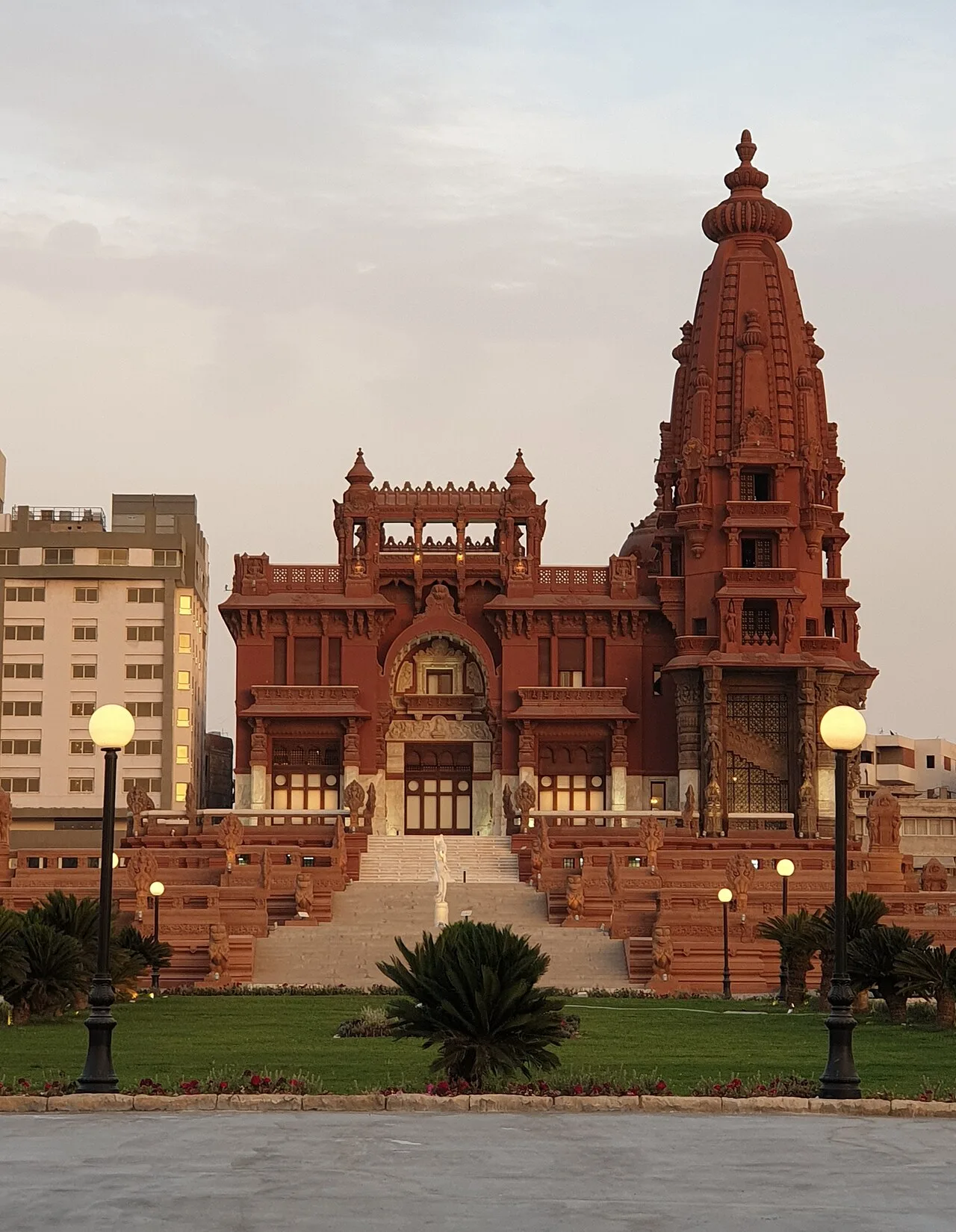
A European-style palace in Cairo built in 1897.
Habib Pasha El Sakakini Palace (Arabic: قصر السكاكيني) is a palace in the al-Zahir district of Cairo, Egypt. Built for the contractor Gabriel Habib Sakakini and completed in 1897, it stands on the site of a former lake at the meeting point of eight roads. Its design combines European, Ottoman and Islamic elements, with Rococo ornament on the façade. The five-storey palace contains 50 rooms, around 400 windows and doors, and about 300 statues.
After Sakakini's death in 1923, his heirs transferred the palace to the Egyptian government. It later served as the headquarters of the Socialist Union and housed the Health Education Museum until 1983. The palace was registered as a monument in 1986 and designated an Islamic and Coptic antiquity the following year. In 2024, restoration work was under way, alongside plans to reuse the building as a cultural centre.
History
Gabriel Habib Sakakini (1841–1923) arrived in Egypt from Damascus at the age of 16 and worked for the Suez Canal Company in Port Said for four years before moving to Cairo. He became a building contractor and helped complete the Khedivial Opera House under the Italian architect Pietro Avoscani before the celebrations marking the opening of the Suez Canal in 1869.
Sakakini chose a site at the meeting point of eight roads in the al-Zahir district. The land, east of the Mosque of al-Zahir Baybars, had previously been occupied by a lake known as Turkmen Karaja. A decree issued by the Mixed Courts in June 1880 documented Sakakini's ownership of the land. He began draining and preparing the site in 1892, and the palace was completed in 1897. After Sakakini's death in 1923, the palace passed to his heirs, who later transferred it to the Egyptian government; one descendant, a doctor, gave his share to the Ministry of Health.
In 1961, the palace was used as the headquarters of the Arab Socialist Union before the Health Education Museum moved there from Abdeen; the basement was also used as a clinic. In 1983, the Ministry of Health ordered the museum's transfer to the Technical Institute in Imbaba; some exhibits were moved there, while others were stored in the palace basement. The Ministry of Culture registered the palace as a monument under decree 143 in 1986. The following year, Prime Ministerial Decision 1691 designated it an Islamic and Coptic antiquity and placed it under the jurisdiction of the Supreme Council of Antiquities.
Information source: Wikipedia · rewritten and edited by Maalem; available under CC BY-SA 4.0
- Location
- Cairo, Egypt
- Coordinates
- 30.0680, 31.2640
- Category
- Historic Landmarks
Source: Wikipedia · Factual information about the real landmark; unrelated to virtual ownership.
Price & ownership history
Landmarks near Sakakini Palace
Map → Available
📖 1 K reads
Available
📖 1 K reads
 Available
📖 84 K reads
Available
📖 84 K reads
 Available
📖 7 K reads
Available
📖 7 K reads
 Available
📖 8 K reads
Available
📖 8 K reads