Temple of Amada
Virtual asset linked to this landmark

- Virtual owner
- The platform
- Times sold
- 0
- Fame on Wikipedia
- 5,401 article reads in 12 months
- Searches (30 days)
- 0
- Watching
- 0
Virtual ownership only. It gives no legal, financial or physical right in the real landmark. Prices are set by the market and may fall.
About Temple of Amada and its history
The oldest surviving Egyptian temple in Nubia, dating to the Eighteenth Dynasty.
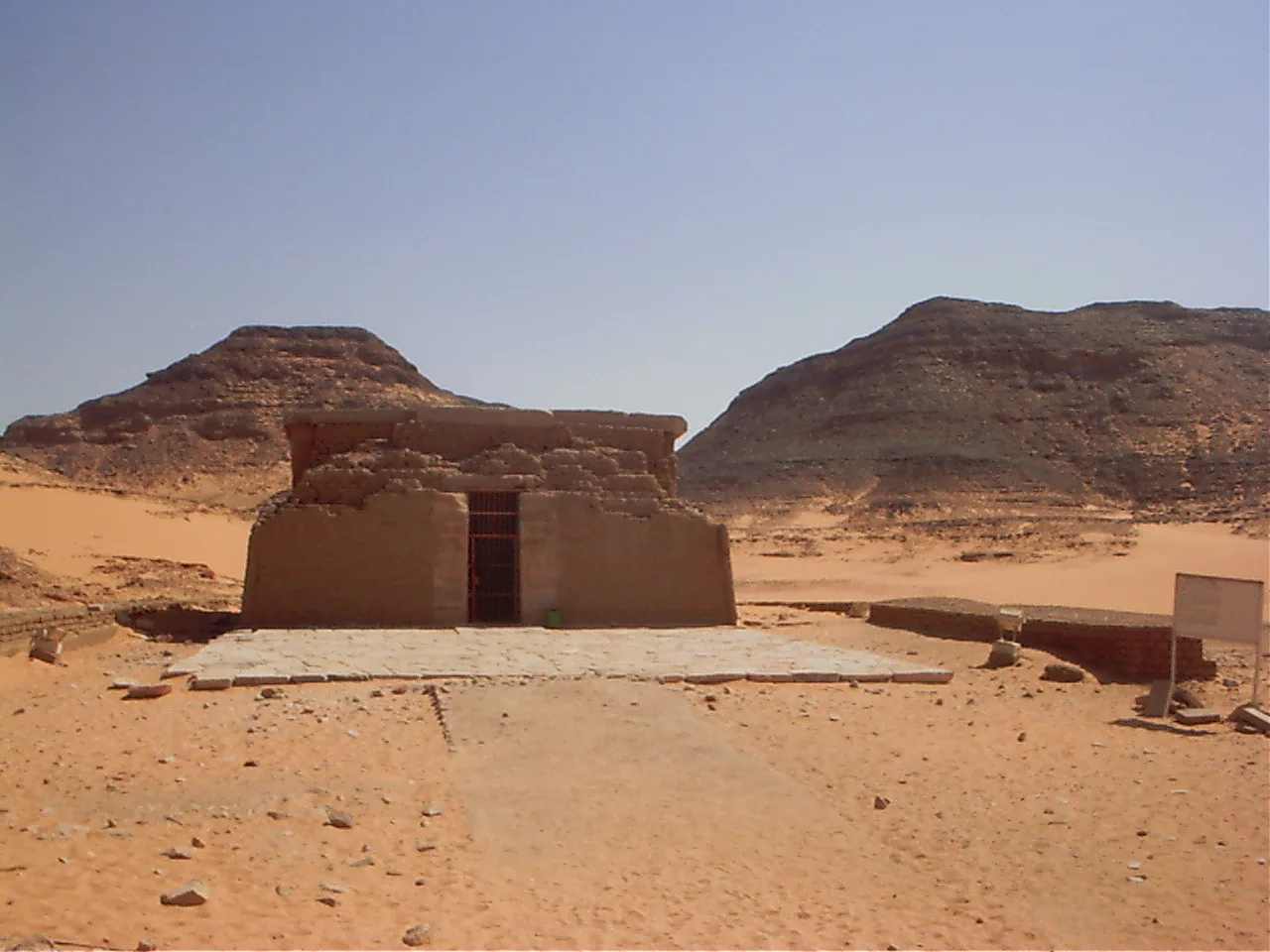
The Temple of Amada, is one of the oldest Egyptian Temples in Nubia. It was constructed during the 18th Dynasty (c. 1550–1295 BC) by Pharaoh Thutmose III. It is one of the oldest Egyptian buildings still present along Lake Nasser. In total, three generations contributed to building the temple (Thutmose III, Amenhotep II, and Thutmose IV). Minor modifications continued into the 19th Dynasty (1295–1186 BC). The temple was dedicated to Amun-Ra and Horakhty-Ra.
During the Amarna period, Akhenaten had the name Amun destroyed throughout the temple but this was later restored by Seti I of Egypt's 19th Dynasty. Various 19th Dynasty pharaohs, especially Seti I and Ramesses II, also "carried out minor restorations and added to the temple's decoration." The stelas of the Viceroys of Kush Setau, Heqanakht and Messuy and that of Chancellor Bay describe their building activities under Ramesses II, Merneptah and Siptah respectively. In the medieval period the temple was converted into a church.
As part of the International Campaign to Save the Monuments of Nubia, along with Abu Simbel, Philae and other Nubian archaeological sites, Amada was relocated between 1964 and 1965, to a new higher site. It was inscribed on the UNESCO World Heritage List in 1979. Over the years, the Amada Temple has undergone extensive restoration and preservation efforts to protect its invaluable heritage.
Temple interior
The original building plan for the structure featured a pylon, forecourt and a portico which led to a sanctuary. However, when Thutmose IV put a roof over the open forecourt, the pillars and walls "were decorated with offering scenes, with those involving Thutmosis IV on the left" and Thutmose III and Amenhotep II on the right. The temple's decoration shows the king in temple ritual and in the company of a wide variety of deities. The reliefs and inscriptions within temple are extremely well preserved due to a layer of plaster covering them when the temple was converted into a church. Still visible today are inscriptions relating to the military exploits by Merenptah, the fourth pharaoh of the Nineteenth Dynasty, and Amenhotep II, the seventh pharaoh of the Eighteenth Dynasty .
The finest painted reliefs are in the innermost section of the temple where Thutmose III and Amenhotep II are shown being embraced or making offerings to various Egyptian gods. The left hand side of the vestibule shows Amenhotep II being crowned by Horus and Thoth and running with an oar and a hap (or navigational instrument). The cult room at the side of the sanctuary contains some interesting foundation and consecration scenes for the temple which depict "the ritual of the 'stretching of the cord', the ceremonial making and laying of bricks, and the offering of the temple to its gods." Although the temple has a dull and crumbling exterior, its interior features some of the most finely cut reliefs with bright and vibrant colors.
Information source: Wikipedia · rewritten and edited by Maalem; available under CC BY-SA 4.0
- Location
- Aswan, Egypt
- Coordinates
- 22.7310, 32.2630
- Category
- Ancient Sites
Source: Wikipedia · Factual information about the real landmark; unrelated to virtual ownership.
Price & ownership history
Landmarks near Temple of Amada
Map →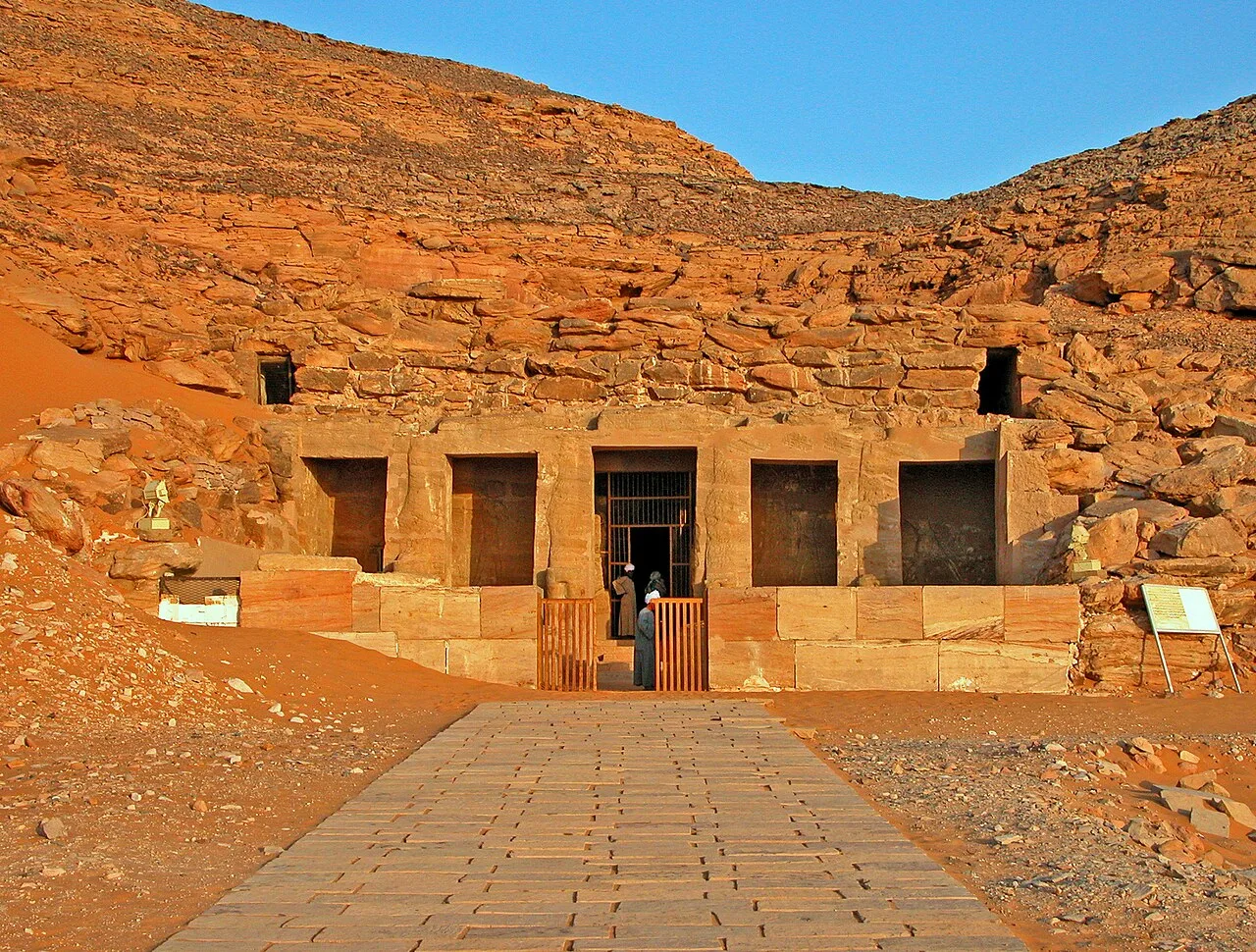 Available
📖 3 K reads
Available
📖 3 K reads
 Available
📖 58 K reads
Available
📖 58 K reads
 Available
📖 10 K reads
Available
📖 10 K reads
 Available
📖 2 K reads
Available
📖 2 K reads