Khaybar Oasis
Virtual asset linked to this landmark

- Virtual owner
- The platform
- Times sold
- 0
- Fame on Wikipedia
- 58,496 article reads in 12 months
- Searches (30 days)
- 0
- Watching
- 0
Virtual ownership only. It gives no legal, financial or physical right in the real landmark. Prices are set by the market and may fall.
About Khaybar Oasis and its history
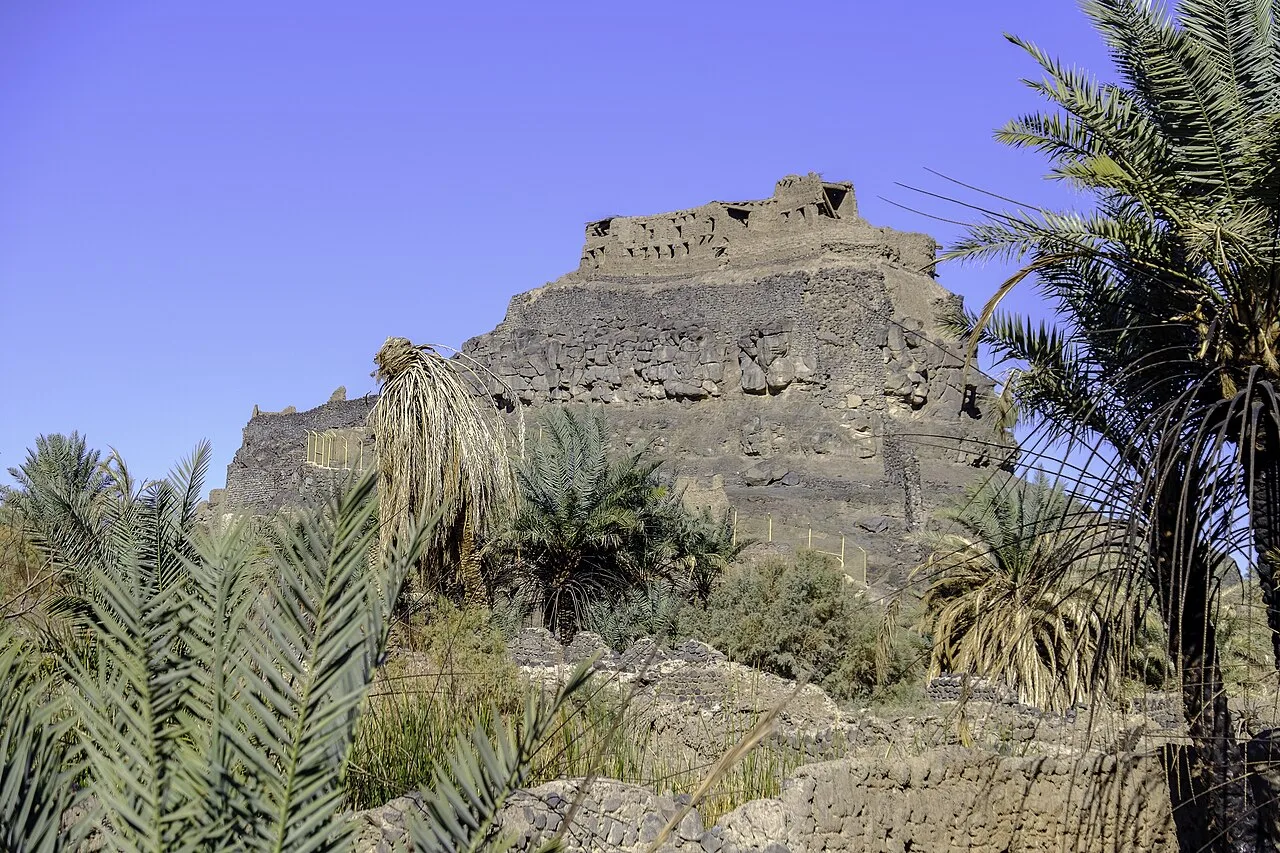
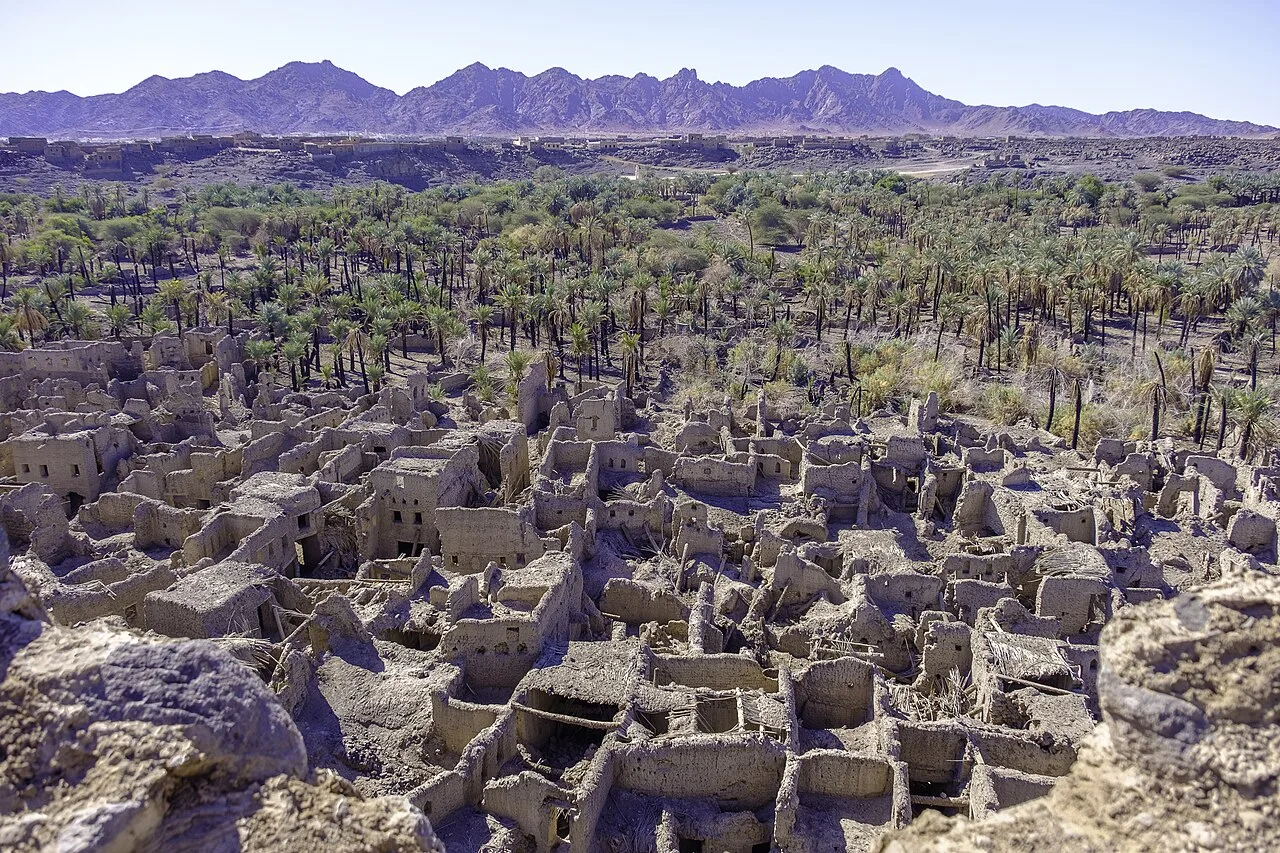
An ancient oasis amid a volcanic lava field, with historic forts and villages.
Khaybar (Arabic: [ˈxæjbɑr], خَيْبَر) was an oasis in Medina Province, Saudi Arabia, situated some 153 kilometres (95 mi) north of the city of Medina. Prior to the arrival of Islam in the 7th century, the area had been inhabited by Jews until it was conquered by the Muslims under Prophet Muhammad during the Battle of Khaybar in 628 CE.
The archaeological site of al-Natah in the oasis covered about 1.5 hectares with some 500 residents, protected by ramparts. The occupation dates from around 2400 to 1500 BCE, from the late Early Bronze Age to the early Late Bronze Age.
Before the advent of Islam in the 7th century CE, indigenous Arabs and Jews made up the population of Khaybar, but when Jewish settlement in northern Arabia began is unknown. In 567, Khaybar was invaded and purged of its Jewish inhabitants by the Ghassanid Arab Christian king Al-Harith ibn Jabalah. He later freed the captives upon his return to the Levant. A brief account of the campaign is given by Ibn Qutaybah, which may also be mentioned in the sixth-century Harran inscription. Khaybar Oasis was completely surrounded by a massive wall in pre-Islamic times, similar to other large walled oases in northwestern Arabia and dates back to the Bronze Age, between 2250 and 1950 BCE it would have been needed for protection against surrounding nomadic groups of populations from the desert, potentially carrying out raids on oasis settlements.
As late as the 7th century, Khaybar was still inhabited by Jews, who pioneered the cultivation of the oasis.
In 627, Muhammad ordered the Expedition of Fadak to confront the Bani Sa'd bin Bakr tribe because Muhammad received intelligence they were planning to help the Jews of Khaybar. In this expedition one person was captured by Muslims, and the rest of the tribe fled.
The Battle of Khaybar took place in May/June 628. The Jewish Banū Naḍīr of Medina, who claimed to be descendants of Aaron the priest, owned lands in Khaybar and had castles, fortresses and weapons there. After Muhammad expelled them from Medina in 625, their leaders moved to their estates in Khaybar to prepare for war against Muhammad and to recruit the aid of other non-Muslim Arab tribes. Muhammad first sent disguised guests to the homes of the leaders of Banū Naḍīr, who killed their hosts. Muhammad's victory over the Jews of Khaybar in the subsequent battle was also aided by the distance of the settlements and their castles from one another, the absence of co-ordination between the fighting forces, the death of the leader Sallām ibn Mishkam and a Jew who showed the Muslims the secret entrances to one of the fortresses. The castles of Khaybar had tunnels and passages, which in wartime enabled the besieged to reach water sources outside the castles. Between 16 and 18 Muslims and 93 Jews were killed in the battle.
Captives of war and slaves from other countries were brought to Khaybar, and the people of Hejaz became more accustomed to agriculture.
Information source: Wikipedia · rewritten and edited by Maalem; available under CC BY-SA 4.0
- Location
- Khaybar, Saudi Arabia
- Coordinates
- 25.6980, 39.2930
- Category
- Ancient Sites
Source: Wikipedia · Factual information about the real landmark; unrelated to virtual ownership.