Pyramid of Hawara
Virtual asset linked to this landmark

- Virtual owner
- The platform
- Times sold
- 0
- Fame on Wikipedia
- 25,386 article reads in 12 months
- Searches (30 days)
- 0
- Watching
- 0
Virtual ownership only. It gives no legal, financial or physical right in the real landmark. Prices are set by the market and may fall.
About Pyramid of Hawara and its history
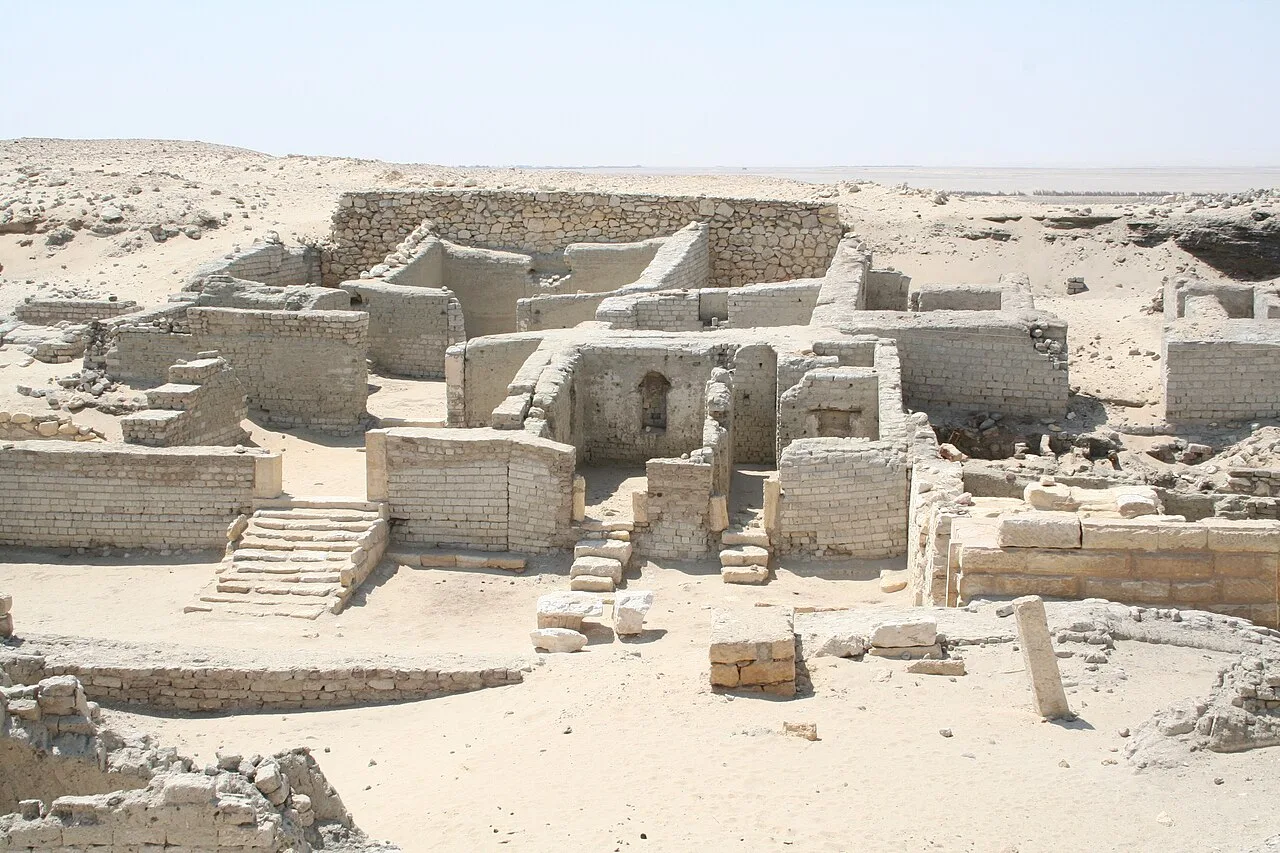
A mudbrick pyramid of Amenemhat III at the entrance to the Fayoum; its mortuary temple was known in antiquity as the Labyrinth.
Hawara (Arabic: هوارة المقطع, romanized: Hawāra al-Maqṭaʿ) is an archaeological site of Ancient Egypt, south of the site of Crocodilopolis ('Arsinoë', also known as 'Medinet al-Faiyum') at the entrance to the depression of the Fayyum oasis. It is the site of a pyramid built by King Amenemhat III of the 12th dynasty, between the 19th and 18th centuries BC.
History
Amenemhat III was the last powerful ruler of the 12th Dynasty, and the pyramid he built at Hawara is believed to post-date the so-called "Black Pyramid" built by the same ruler at Dahshur. This is believed to have been Amenemhat's final resting place. At Hawara there was also the intact (pyramid) tomb of Neferuptah, daughter of Amenemhat III. This tomb was found around 2 km south of the king's pyramid.
In common with the Middle Kingdom pyramids constructed after Amenemhat II, it was built of mudbrick round a core of limestone passages and burial chambers, and faced with limestone. Most of the facing stone was later pillaged for use in other buildings— a fate common to almost all of Egypt's pyramids— and today the pyramid is little more than an eroded, vaguely pyramidal mountain of mud brick, and of the once magnificent mortuary temple precinct formerly enclosed by a wall there is little left beyond the foundation bed of compacted sand and chips and shards of limestone.
The huge mortuary temple that originally stood adjacent to this pyramid is believed to have formed the basis of the complex of buildings with galleries and courtyards called the "Labyrinth" by Herodotus; this building was also mentioned by Strabo and Diodorus Siculus. (There is no historicity to the assertion of Diodorus Siculus that this was the model for the labyrinth of Crete that Greeks imagined housed the Minotaur.)
The demolition of the "labyrinth" may date in part to the reign of Ptolemy II, under whom the Pharaonic city of Shedyt (Greek Crocodilopolis, the modern Medinet el-Fayum) was renamed to honour his sister-wife Arsinoë; a massive Ptolemaic building program at Arsinoë has been suggested as the ultimate destination of Middle Kingdom limestone columns and blocks removed from Hawara, and now lost.
Pharaoh Sobekneferu of the 12th Dynasty also built at the complex. Her name meant "most beautiful of Sobek", the sacred crocodile.
Information source: Wikipedia · rewritten and edited by Maalem; available under CC BY-SA 4.0
- Location
- Fayoum, Egypt
- Coordinates
- 29.2742, 30.8989
- Category
- Pyramids
Source: Wikipedia · Factual information about the real landmark; unrelated to virtual ownership.
Price & ownership history
Landmarks near Pyramid of Hawara
Map → Available
 Available
📖 7 K reads
Available
📖 7 K reads
 Available
📖 16 K reads
Available
📖 16 K reads
 Available
📖 3 K reads
Available
📖 3 K reads