Qubbet el-Hawa
Virtual asset linked to this landmark

- Virtual owner
- The platform
- Times sold
- 0
- Fame on Wikipedia
- 6,728 article reads in 12 months
- Searches (30 days)
- 0
- Watching
- 0
Virtual ownership only. It gives no legal, financial or physical right in the real landmark. Prices are set by the market and may fall.
About Qubbet el-Hawa and its history
Rock-cut tombs of ancient governors of Aswan on the west bank of the Nile.
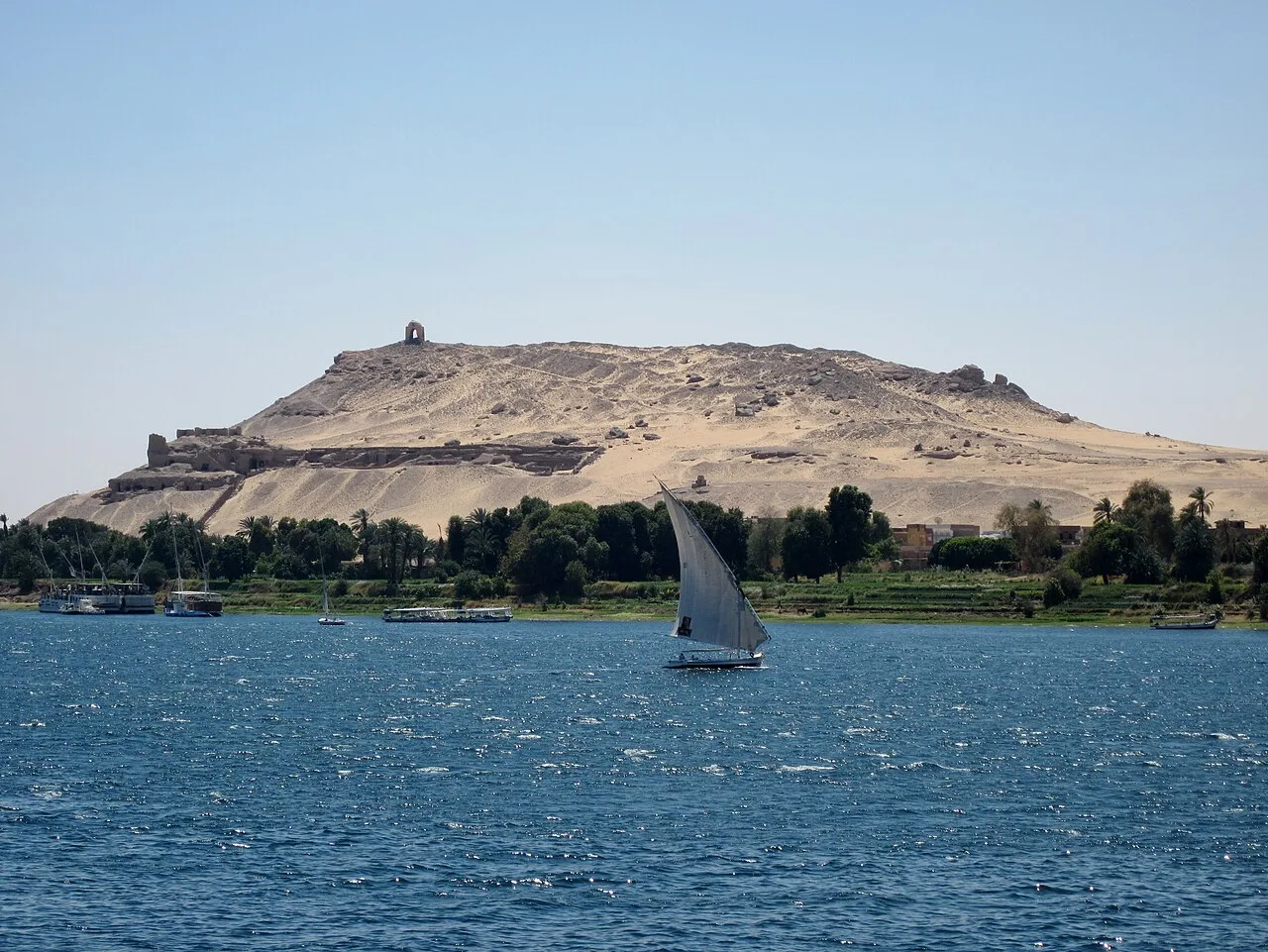
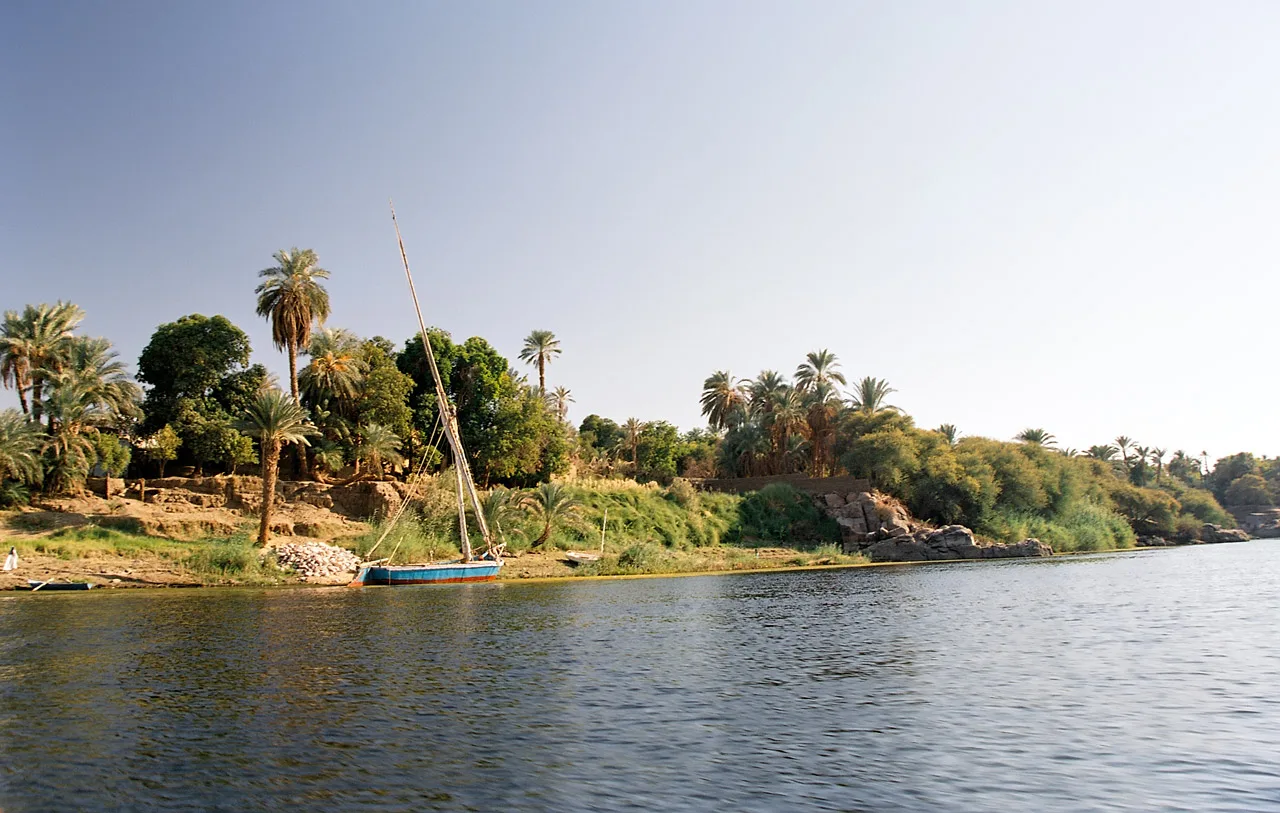
Qubbet el-Hawa (Arabic: قبة الهوا) or "Dome of the Wind" is a site on the western bank of the Nile, opposite Aswan, that serves as the resting place of ancient nobles and priests from the Old and Middle Kingdoms of ancient Egypt. The necropolis was in use from the Fourth Dynasty of Egypt until the Roman Period.
The site was inscribed on the UNESCO World Heritage List in 1979 along with other examples of Upper Egyptian architecture, as part of the "Nubian Monuments from Abu Simbel to Philae" (despite Qubbet el-Hawa being neither Nubian, nor between Abu Simbel and Philae).
Name
The name is derived from the dome of the tomb of an Islamic sheikh, but archaeologically, it is usually understood as referring to the site of the tombs of the officials lined up on artificial terraces below the summit of the Nile bank upon which the Islamic tomb stands.
Tombs of the Nobles
There have been about 100 tombs discovered as of July 2022. The official website of the Egyptian Ministry of Tourism and Antiquities writes that the inscriptions on the walls of the tombs here highlight the importance of the roles nobles played during this period of history, such as launching exploratory and commercial voyages and leading military campaigns.
The majority of the tombs date from the Old Kingdom and provide an insight into the burial traditions of Upper Egyptian Nome 1 during the later Old Kingdom. Examples include Mekhu and his son Sabni from the Sixth Dynasty. Mekhu and Sabni's tombs describes the former leading a royal expedition to the south and, upon his return, being attacked and killed by Nubians; Sabni is said to wage a counterattack to recover his father's body and seek revenge. Others include Sobekhotep who served as a seal-bearer of the King of Lower Egypt in the Fifth Dynasty, Ishemai (QH 98 - dated to 6th dynasty pharaoh Pepi II), Heqaib, and Harkhuf. One tomb, QH 33, was found to be oriented to the winter solstice. Among the most important tombs are those of the expedition leaders (like Harkhuf) dispatched to distant lands to negotiate the acquisition of foreign goods for the Egyptian court.
The tomb of a chanting priest named Setka (QH 110; aka Setikai) from the First Intermediate Period
During the Middle Kingdom, a minor sanctuary for one (or more) of these leaders (designated with the appellation "Heqa-jb") was prominent in the town at Elephantine.
Sarenput I (QH 36) contemporary with king Senusret I.
Heqaib, Son of Penidebu (QH 28) contemporary with king Senusret I.
Sarenput II (QH 31) contemporary with kings Amenemhat II and Senusret II.
Heqaib, Son of Sithathor (QH 30) contemporary with kings Senusret III and Amenemhat III.
The tomb of a New Kingdom high priest named Kakm, the tomb of User Wadjat a New Kingdom-era ruler of Elephantine, and the tomb of Amenhotep a New Kingdom-era high priest and bearer of the seals of Upper Egypt.
Information source: Wikipedia · rewritten and edited by Maalem; available under CC BY-SA 4.0
- Location
- Aswan, Egypt
- Coordinates
- 24.1020, 32.8890
- Category
- Ancient Sites
Source: Wikipedia · Factual information about the real landmark; unrelated to virtual ownership.
Price & ownership history
Landmarks near Qubbet el-Hawa
Map → Available
 Available
 Available
📖 2 K reads
Available
📖 2 K reads
 Available
📖 69 K reads
Available
📖 69 K reads